Online safety,
taught the way instinct
is taught.
Cyber Ved Kids translates enterprise-grade security thinking into superhero adventures — so children learn to outsmart online trouble before they meet it.
Join 30,000+ families on YouTube →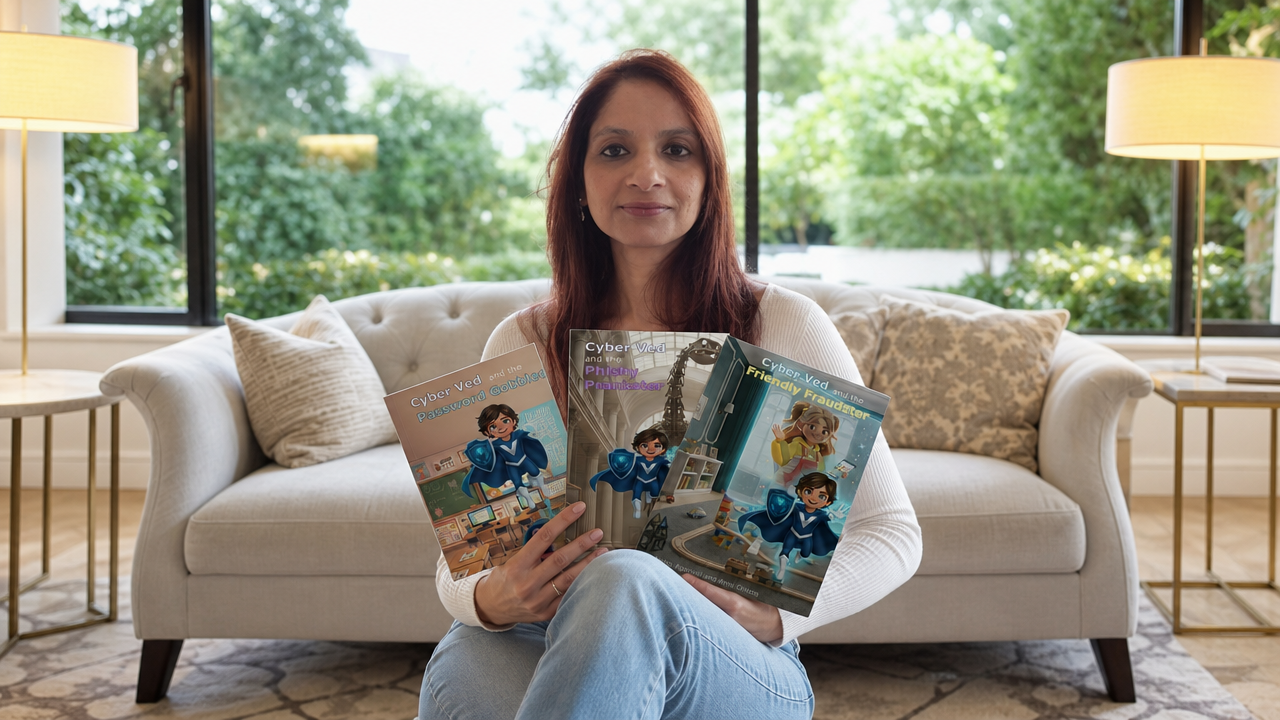


BBC Radio London — talking online safety for kids.
Author Neha Agarwal joined BBC Radio London to talk about why online safety belongs in childhood — taught as early and as instinctively as looking both ways before crossing the road.

Online safety, on air.
Spread the word about the BBC Radio London interview. Tap copy to grab a ready-made caption with both links.
As heard on BBC Radio London 📻 Author Neha Agarwal talks about why online safety belongs in childhood — taught as early and as instinctively as looking both ways before crossing the road. 🎧 Listen to the segment: https://www.bbc.co.uk/sounds/play/m002zdtq 📚 Books: https://cybervedkids.com 🖊 Author: https://nehaagarwal.co.uk #OnlineSafety #CyberVedKids #BBCRadioLondon #ParentingTips #DigitalWellness
The territory we cover, end to end.
Online Safety
Passwords, phishing, strangers and scams — the four 'S's at the heart of every Cyber Ved story.
Digital Wellness
Healthy screen-time habits, kindness online and the confidence to put the device down.
AI
Helping the next generation grow up curious about AI — and clear-eyed about what's real, what's fake, and who's behind it.
How we teach, always.
Empowerment over Fear
Storytelling over Lecture
Instinct over Theory
One journey
from 3 to 10.
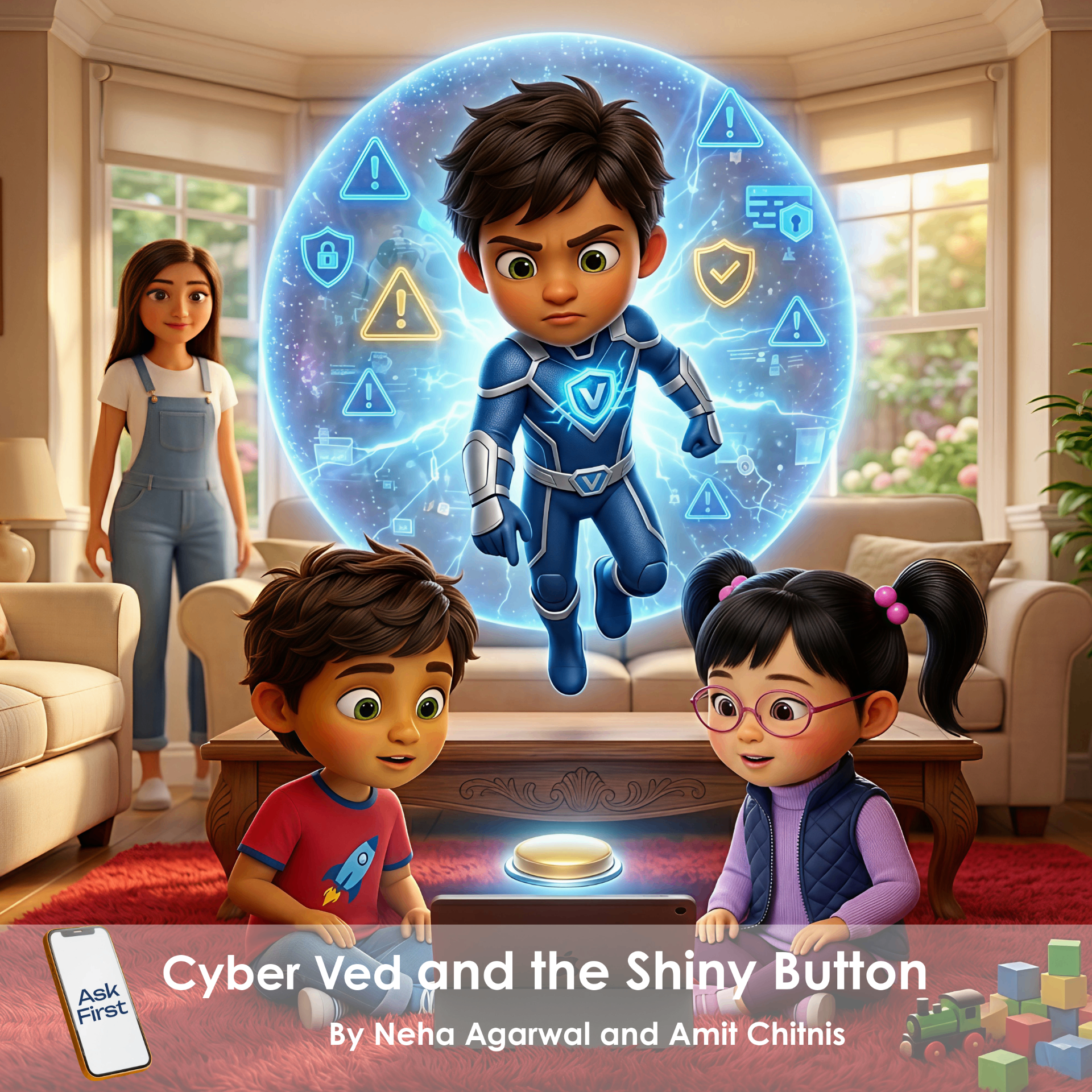
Every book is aligned to the UK National Curriculum and grouped into three reading bands — so the right story finds the right child at the right moment. Two bands are launched today, with the third in development.
Instincts are built
from 4–6.
For today's generation, the online safety conversation can't wait. Three picture books. Three lifelong habits. One small spark of cyber wisdom — lit before they even start school.
Cyber Ved Cyber Shields.
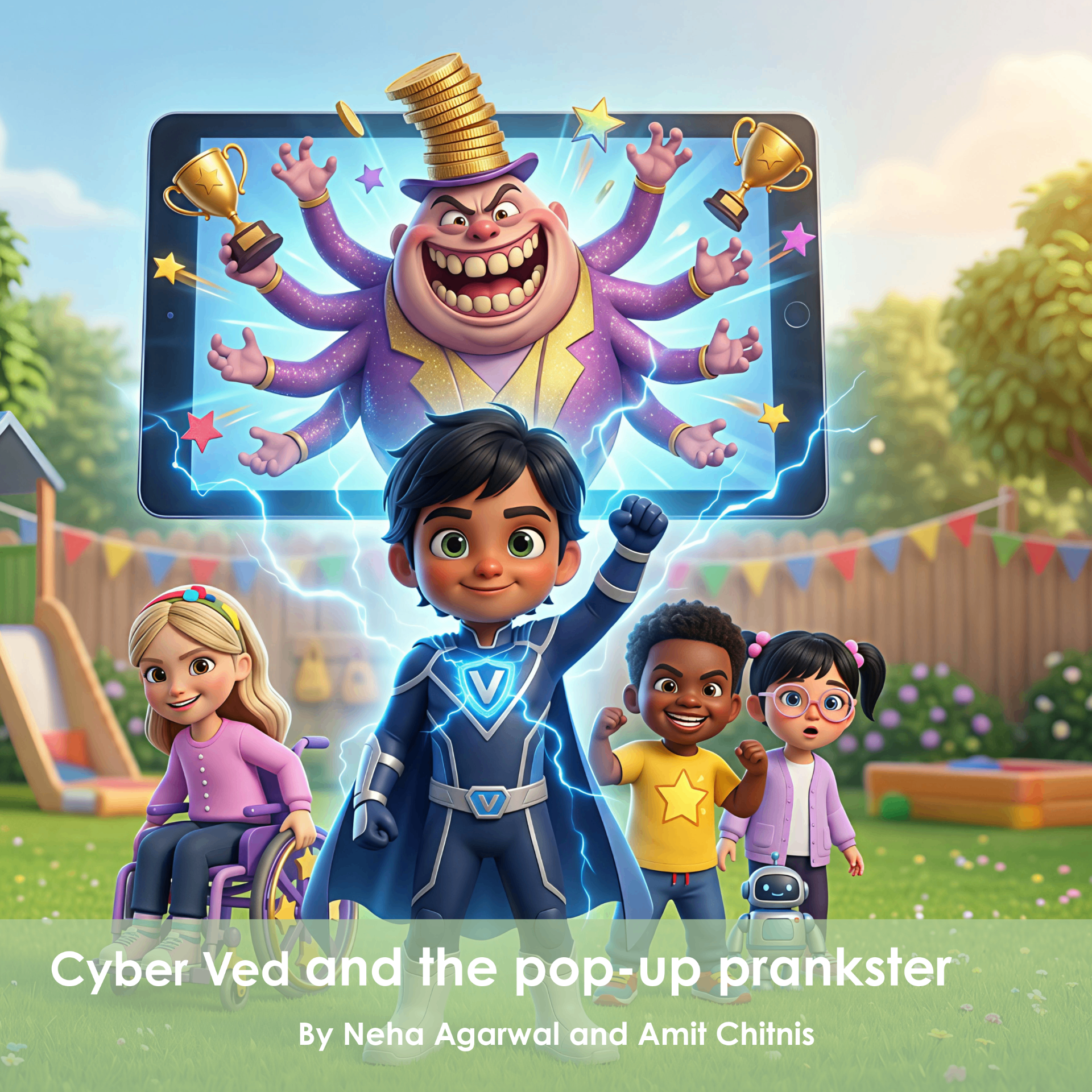
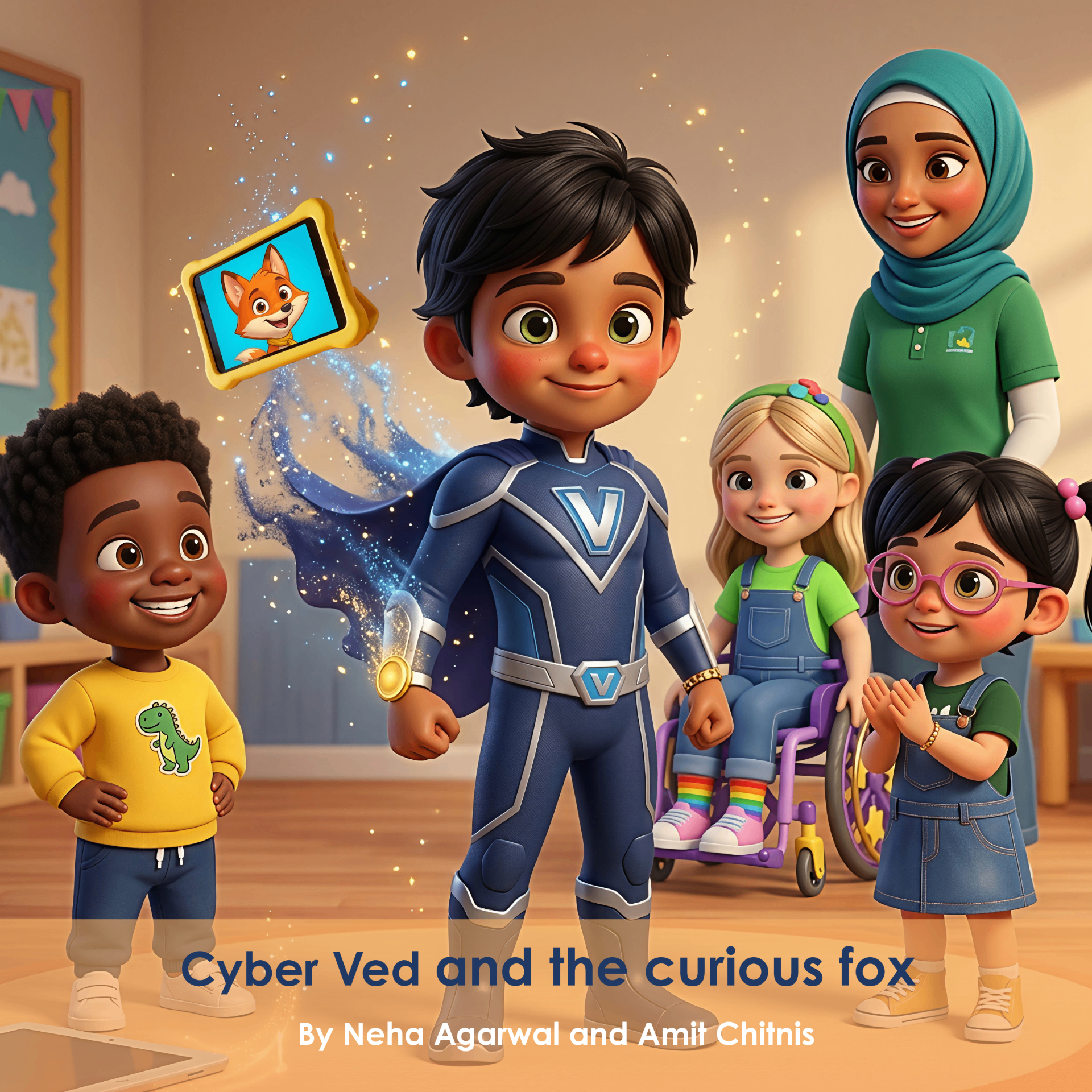
Made for ages 7–9.
Three storybooks that turn the four habits into instinct — Password Gobbler, Phishy Prankster, and Friendly Fraudster. The chapter where Ved becomes Cyber Ved.
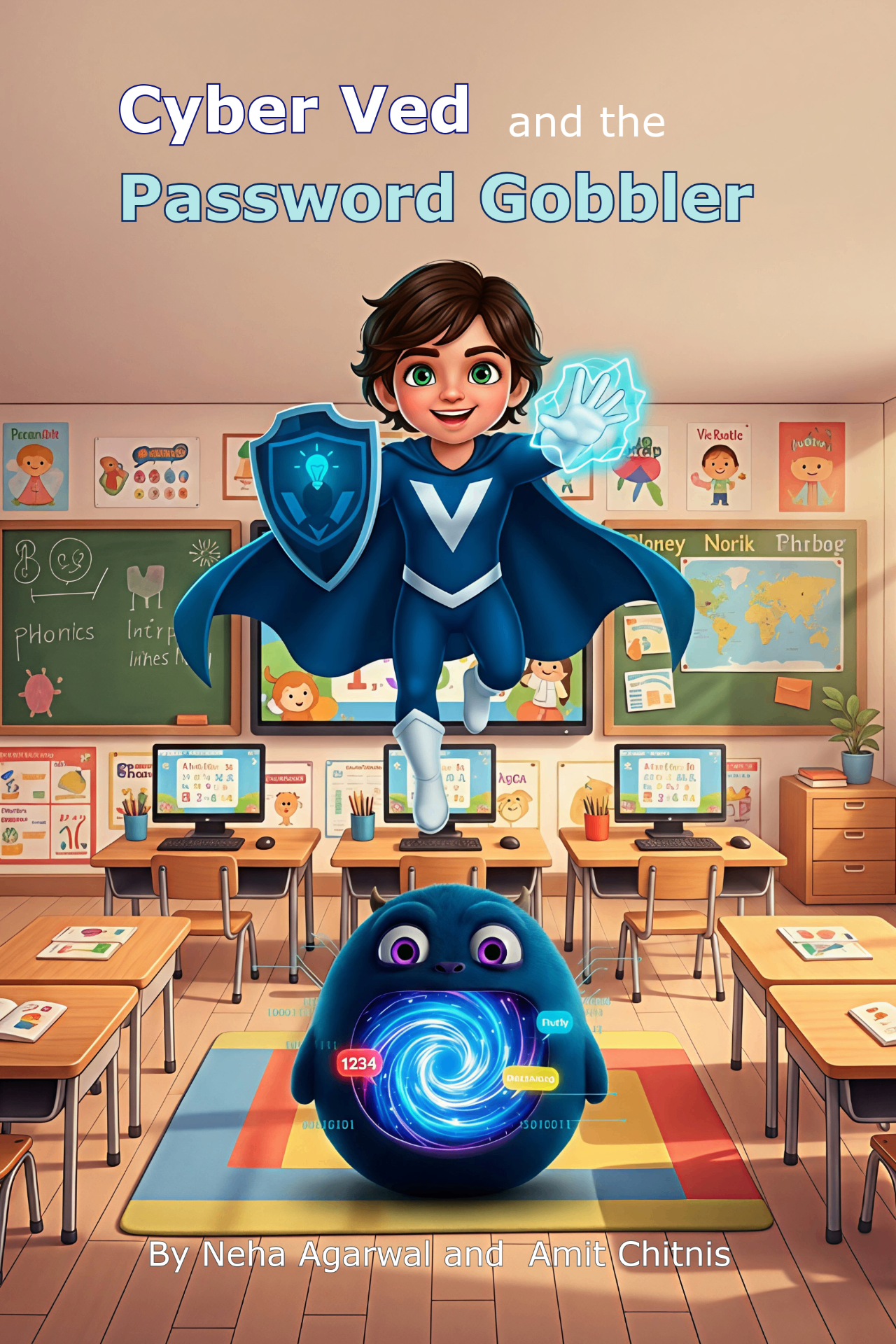
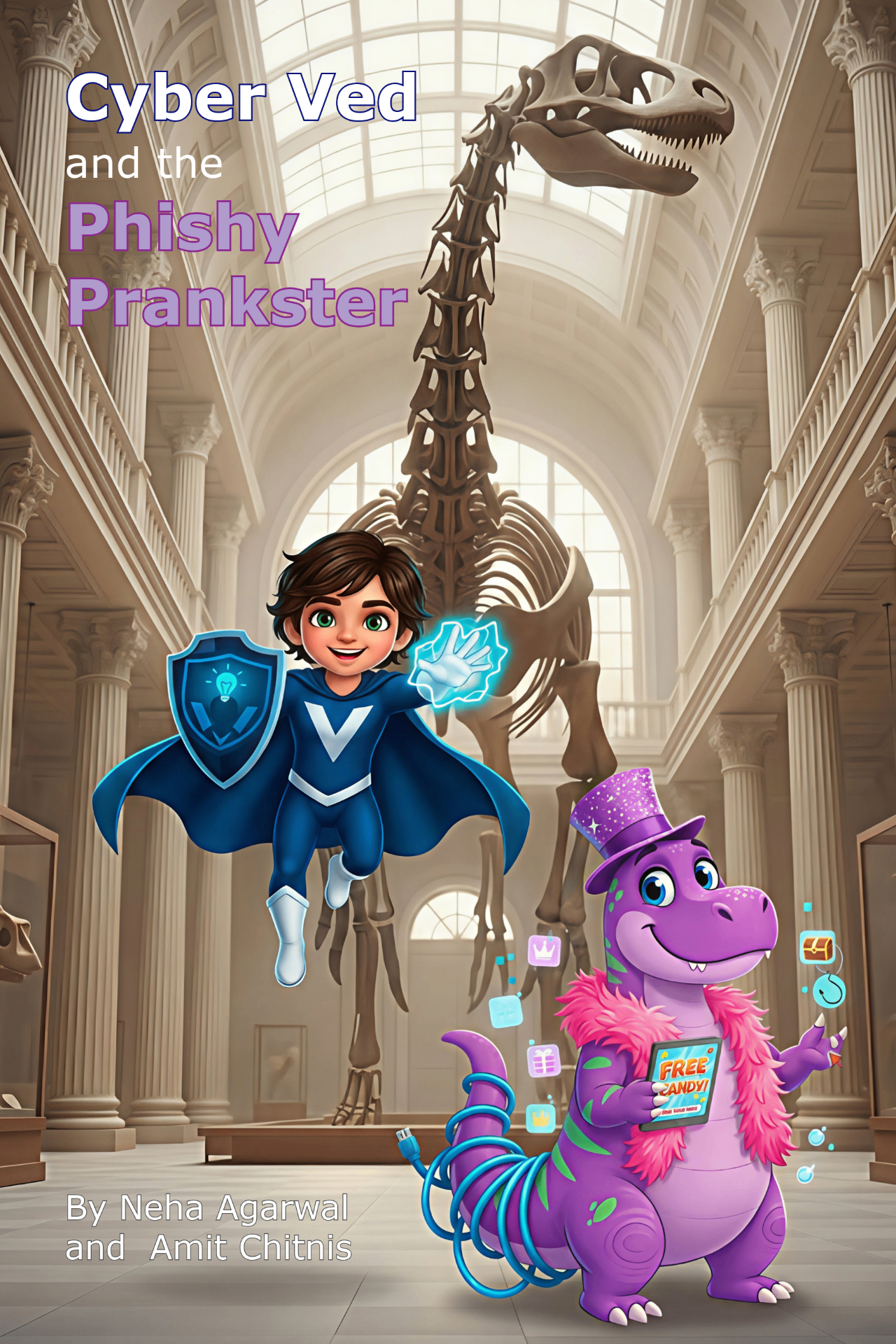
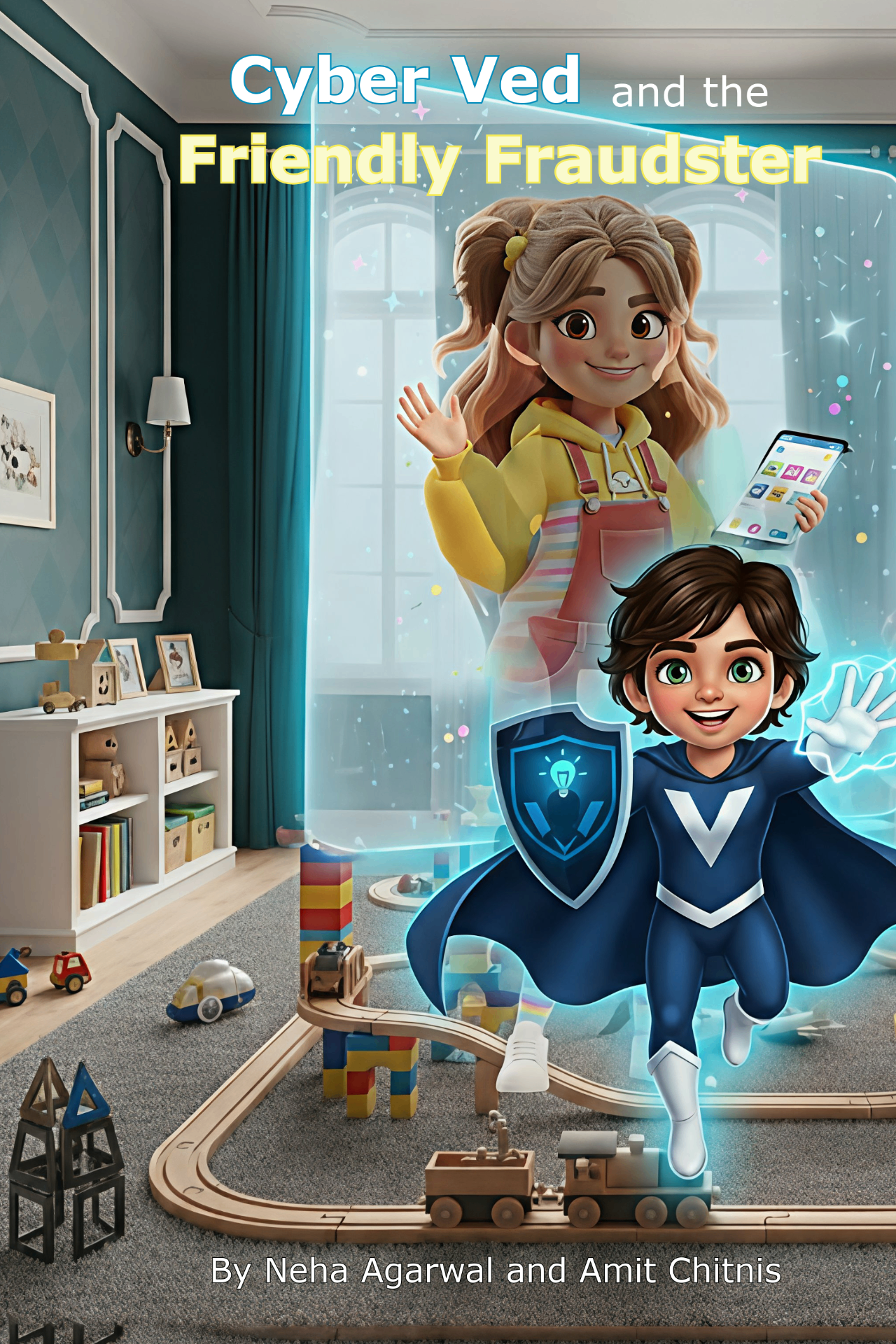
Turn the page on Cyber Shields.
4 sample pages from each book. Click the edges, tap the arrows, or swipe to flip.
Turn the page on Little Sparks.
9 sample pages from each book. Click the edges, tap the arrows, or swipe to flip.

Frontline defence for enterprise.
Lifelong instinct for children.
Built by leaders who shape global cybersecurity by day — and tell stories children actually want to hear by night. Every page is reviewed by parents, teachers and security practitioners.










Four habits
for a digital life.
The trilogy is built around four core habits — small, repeatable behaviours that compound into resilient, kind, confident digital citizens.
Password Power
Keeping passwords secret is the ultimate superpower.
The Ask-First Rule
Spotting the trusted adults when something feels strange.
Private Stays Private
Names, homes and photos belong to us — not to strangers.
Kindness is Code
Being a great digital citizen, even when no one is watching.
You teach your kids not to talk to strangers. But who is teaching them about the strangers who can talk to them through a screen?
As a parent to a 4-year-old, that question hit home one night as Neha watched her son explore his first tablet. She was handing her son the keys to a vast digital universe without a map, a compass, or a seatbelt.
She looked for a tool to help her start these crucial conversations with her son, but found nothing. She realised if she wanted it done right, she had to do it herself. So she didn't just write a book. She started a mission.
Fusing Neha's front-line cyber expertise with her creative vision, she forged Cyber Ved (meaning "Cyber Wisdom") — giving curious young minds the skills, vocabulary and confidence to navigate the digital world safely.
Built by leaders
who do this for a living.

A generation of children who feel confident online — with instincts and habits that protect them for life.
- 1
Online safety becomes a normal part of childhood learning — when their instincts are being developed.
- 2
Children learn to pause, think, and ask for help.
- 3
Families and schools share a simple, consistent playbook.